From Idea to Prototype: Turning Concepts Into Something You Can Test
Discover the difference between an idea and a prototype, how turning a concept into something tangible can help you test assumptions, identify problems, and improve your design, and the real-world situations where moving from idea to prototype can help bring better solutions to life.
Fadil OlaoluwaAugust 25, 20264 min read429 views
Key insights:
●An idea is a possibility; a prototype is something you can test.
●Prototypes help you discover problems earlier.
●A prototype gives you the opportunity to explore the unknowns.
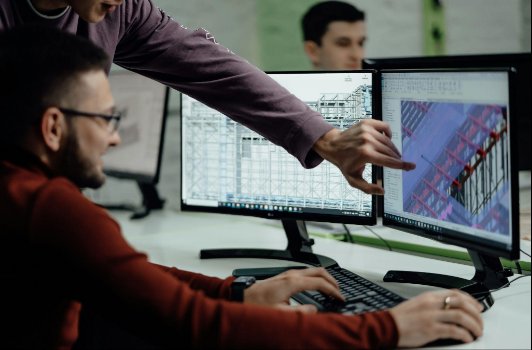
Colleagues checking out a designMost things we use today started as an idea. Someone imagined a product, a tool, a machine, or a solution to a problem. At first, it may have existed only in their mind, on a piece of paper, or as a rough sketch.
But there is a point where an idea needs to move beyond imagination. You need to see it. You need to interact with it. You need to test it. And this is where a prototype becomes important. An idea tells you what you want to create. A prototype gives you an early version of what that idea could become.
But why does that distinction matter?
An idea is a possibility; a prototype is something you can test
Having an idea does not necessarily mean you know how it will work in reality.
For example, imagine someone wants to create a device that automatically waters a plant whenever the soil becomes too dry. The idea sounds simple: detect the moisture level of the soil and activate a pump when necessary.
But once you begin thinking about actually building it, several questions appear. Questions such as: “Where will the sensor be placed?” “How will the pump be connected?” “How will the components fit together?” These are questions an idea alone cannot answer.
A prototype gives you something you can interact with and learn from. You can build an early version, test how the components work together, identify problems, and make changes.
The idea gives you a direction, while the prototype gives you something to learn from.
Prototypes help you discover problems earlier
One of the biggest advantages of building a prototype is that it exposes problems that may not have been obvious when the idea existed only on paper.
You might have a design that looks perfect on your computer but discover that two components cannot fit together when you physically assemble them.
These discoveries are not necessarily failures; they are information.
The earlier you discover that something does not work, the easier it is to change it. This is why prototyping is often part of an iterative process, with each version giving you a better understanding of what the final product needs to become.
A real-world example: from digital design to physical object
Consider an engineer designing an enclosure for an electronic device. The enclosure needs to protect the components, provide access to the necessary ports, and fit the device properly.
The engineer could design the enclosure digitally and assume that everything will fit perfectly. But what happens when the design is manufactured? Instead of committing immediately to large-scale manufacturing, the engineer can create a prototype of the enclosure.
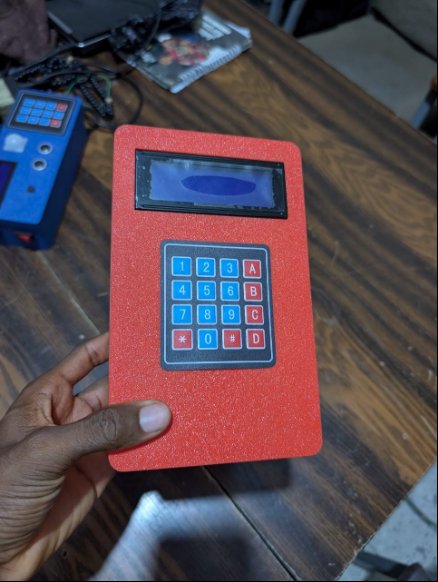
A 3D-printed prototype, for example, can provide a physical version of the design that can be held, assembled, tested, and modified. The engineer can discover what works and what doesn't before moving further into production. The prototype therefore becomes more than a physical copy of the design.
It becomes a way of asking questions about the idea in the real world.
Expert holding a newly printed 3D prototypeWhen should you think: Idea → Prototype?
Not every idea needs to become a prototype immediately. But there are certain situations where building an early version can provide valuable information. Situation such as:
when you're creating something new
when you're unsure whether your design will work
when you're solving a physical problem
when you're developing a product
when you're learning by building
A prototype doesn't have to be perfect
Whether you're an engineer testing a design, a product designer validating a concept, an embedded systems developer creating an enclosure, an architect exploring a physical model, or a student working on a project, the journey from idea to prototype allows you to turn an abstract concept into something you can actually see, hold, test, and improve.
This is where 3D printing can become useful.
Instead of committing immediately to a final product, you can turn your digital design into a physical prototype and use it to test things such as size, fit, shape, mounting, functionality, and overall design.
At Nascomsoft Embeded, we support this process through 3D modelling, model cleanup, slicing preparation, prototype printing, and casing design for electronics projects. Whether you need a physical body for an electronics project, a mounting bracket, a protective enclosure, a display case, or a product mockup, our 3D printing service can help you move from a digital design to something you can physically test and improve.
The goal isn't to make the perfect version on the first attempt; it's to build something, learn from it, and make the next version better.